

Cyclone Gabrielle damage
The cost of Cyclone Gabrielle for Waipā has been revealed.
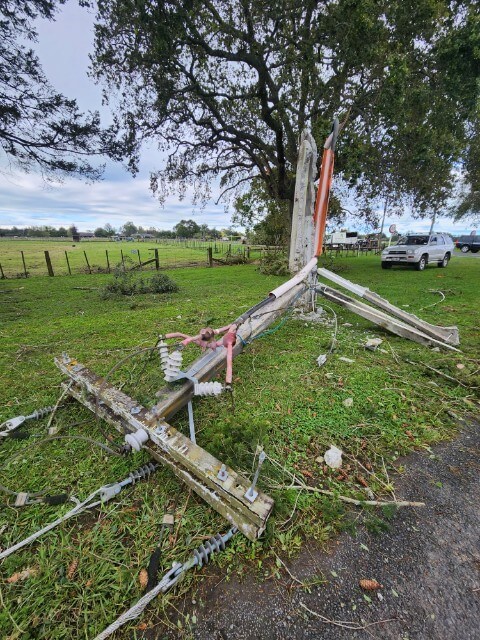
Remedial work, which includes clearing fallen trees and branches, is likely to cost more than $300,000, Park Operations team leader Matt Johnston told the Service Delivery committee this week.
Details of cyclone damage to other parts of the council’s operations were also tabled at the meeting.
Johnston was seeking an increase of nearly $500,000 in the council’s annual Tree Maintenance Services contract with Treescape to cover the cyclone and other weather-related costs.
Rather than increase rates, Johnston said it would come from a mix of existing budgets and the general insurance reserve.
The $630,000 Treescape contract, in place since 2019, covers street tree maintenance which in recent years has increased due to storm events and an increase in tree numbers at Lake Te Koo Utu and other district parks.
Trees are not insured – insurance only covers the damage they create.
The council has built up a reserve fund with unused premium increases which Johnston recommended the council use to pay the additional storm costs.
There were still many trees to inspect and maintain and providing the additional money would allow that to continue.
The committee was told the cyclone also caused a minor “non-compliance” at the Cambridge Wastewater Treatment Plant and some power cuts. None of this resulted in any interruption to water supply or wastewater conveyance.
Work on relining the Albert Street pumpstation in Cambridge has been delayed due to supply restrictions after the cyclone.
Meanwhile Emergency Management operations manager David Simes told this week’s Regulatory committee that the Western Waikato Shared Service organisation comprising Waipā, Ōtorohanga and Waitomo councils was tested during the cyclone and weather incidents.
“While these events were well managed, receiving favourable feedback from the public in general, staff and elected members, the nature of these events has highlighted opportunities to improve in across a small number of functional areas.
“Internal compatibility of IT platforms across three councils, external communications to isolated communities where normal channels are damaged and non-operational, and cross-training of staff to build depth and resilience in availability, have all been highlighted,” said Simes.
A State of Emergency was called in Waitomo district because of significant flooding impacts to the roading network and properties.
Simes said recovery work was ongoing in all three districts.