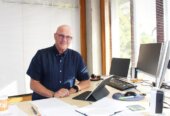


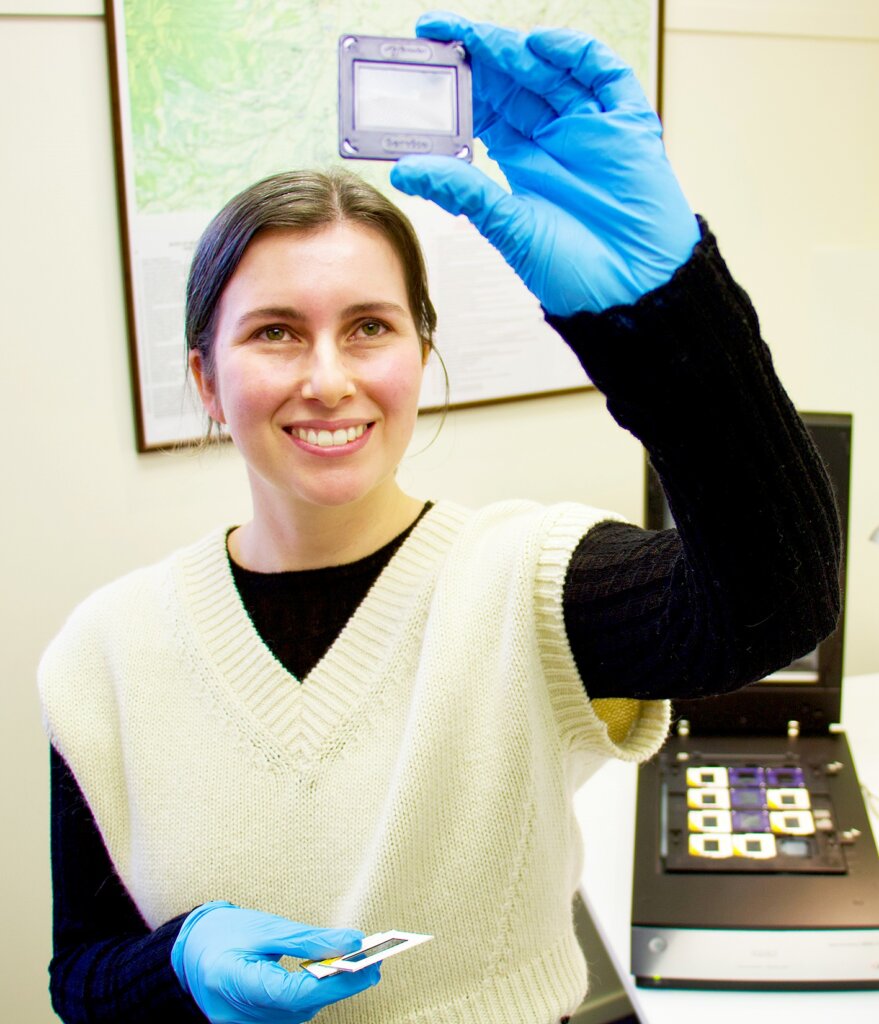
Te Awamutu Museum Education and Research Centre collections manager Sarah Dawe gets ready to scan – or digitise – a slide from the centre’s Mandeno collection.
It’s time to get scanning at Te Awamutu Museum Education and Research Centre.
With staff already undertaking the process of digitising – either scanning or photographing – much of the taonga the centre holds in the form of exhibition items, its doors are now open to the public wanting to preserve their own precious memories in the same way.
Access to two different scanners is being provided as part of a free service – an overhead scanner for items such as scrapbooks, photo albums and handwritten diaries, and the museum’s newest flatbed scanner which can digitise old photographs, slides and negatives.
Te Awamutu Museum Education and Research Centre collections manager Sarah Dawe told The News the idea to offer the public the opportunity came about as centre staff looked to provide more ways for people to connect with the museum.
“As part of that, we’ve set up a research room which as well as the scanners includes published collections of books on the history of Waipā, our births, deaths and marriages microfiche – which is a great asset – and access to a huge resource called Ancestry Library Edition.”
Those who have items they would like to digitise can book a time in the research room to scan them and create high resolution digital copies.
Museum staff shifted to Rickit Rd premises in March after the centre’s former building near Waipā District Council’s Bank St building was closed overnight last October following a seismic assessment which showed it was vulnerable in an earthquake.
Exhibitions co-ordinator Henriata Nicholas said she likes to think of the new location as a “learning activation space”.
“Every time anyone of any age visits us here, our aim is that they don’t just have a look, but that some level of learning is activated, and they feel connected to what we’re doing here.”
To that end, each of the next six months at the museum will have a hand-picked theme.
Programmes for children and young people have also been running during the school holidays.
July is Matariki month, Henriata said, adding it’s hoped starting to invite the public to scan their items will also prompt people to think about history ahead of plans for Ancestry month at the centre in August.
“Every family will have documents of some kind which are part of their history,” Henriata said.
“And this is a great way in which to preserve them.”
Anyone who books a time to use the scanners will be taken through a brief induction and training session regarding how to best use the equipment, based on what it is they would like to digitise.
Sarah said she’s looking forward to welcoming people who book in to use the scanners.
“I’m excited – people often love to share their own stories, and through the special items they bring in it’ll be nice to connect with the community like that,” she said.
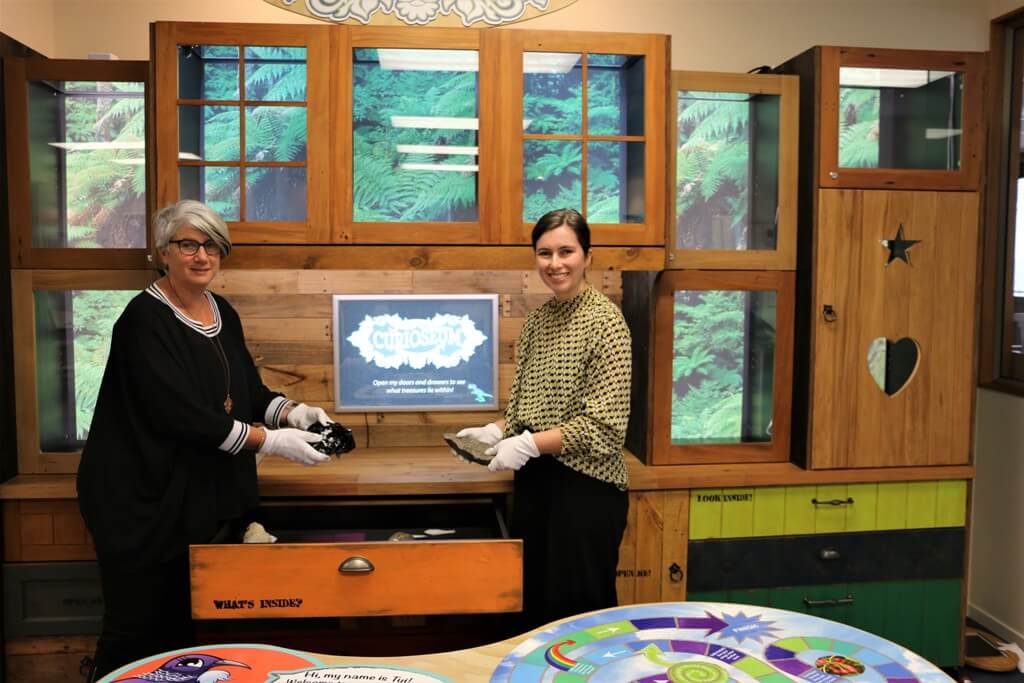
Museum director Anne Blyth (left) and collection manager Sarah Dawe preparing the Te Awamutu Museum Education and Research Centre for opening. File photo.