

Eruptions in Iceland and Hawaii produce beautiful and sometimes destructive scenes of molten rock shooting into the air in a style that we call lava fountaining.

Janine Krippner
This is when lava ascends to the surface very quickly, then sprays into the air as gas is rapidly released from the molten mixture and expands then bursts. Above this incredible spectacle you often see a dense plume of volcanic gases appearing white, light grey, or slightly brownish or blue, which is often wrongly called smoke in the media. Some lava fountaining, like at Etna volcano in Italy, produces a much denser grey to black volcanic ash plume made up of solid fragmented rock (still not smoke). This gas and ash can cause significant issues if high concentrations are blown by winds towards populations.
Lava fountaining involves the more fluid, low viscosity lava compositions and often lava flows form at their base, carrying the hot, fluid rock far away from the vent. The fountains often reach about 10 to 100 metres in height but can be much higher during more energetic eruptions. In 2013 a lava fountain at Etna reached a stable height of around 25,000m, peaking at around 34000m. The height of the Auckland Sky Tower is 328m and the heigh of Pirongia is around 960m. Can you imagine lava shooting 2.5 kilometres into the air?
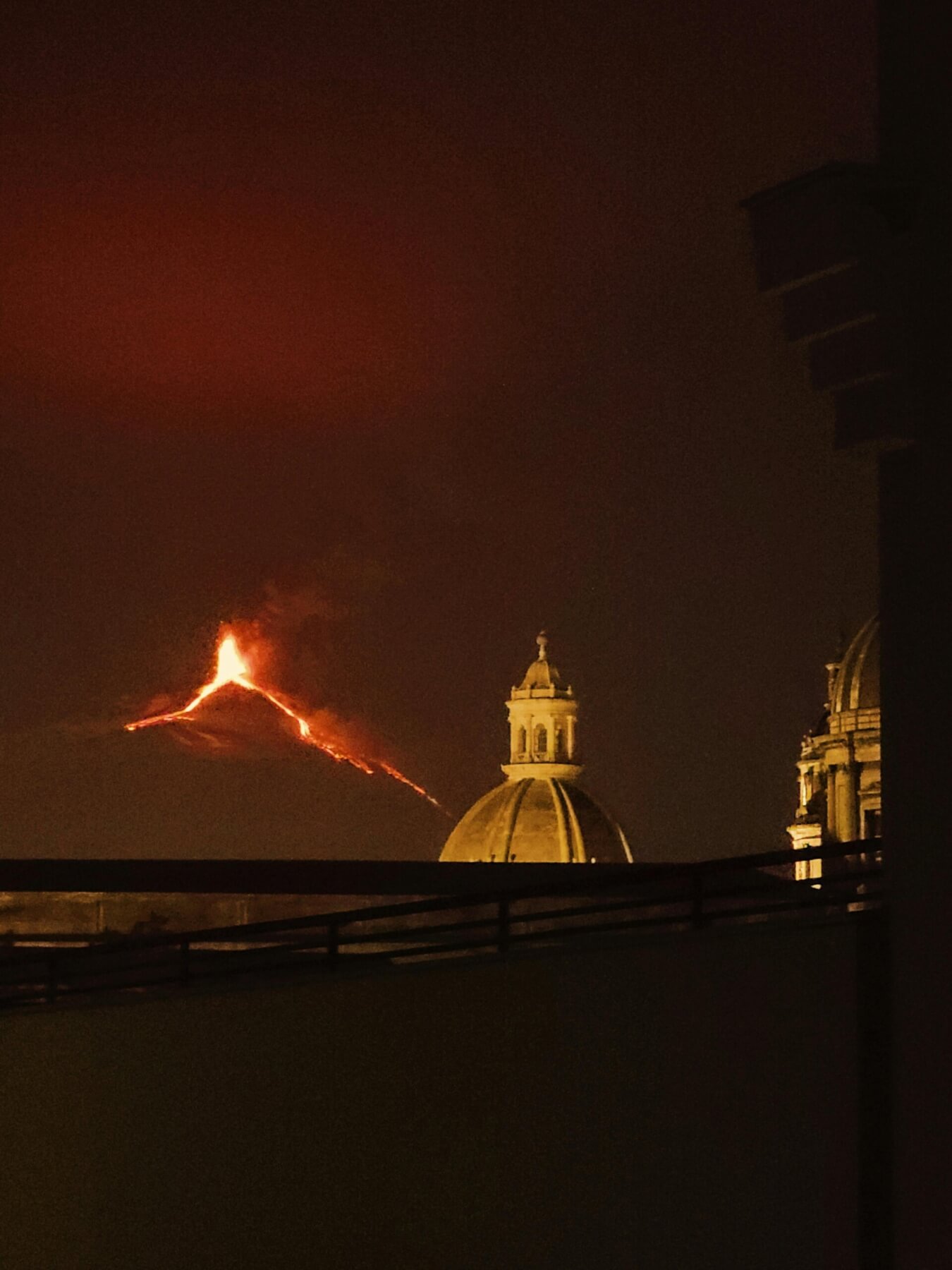
Etna Volcano Eruption at Night. Photo: Karl K pexels.com
Fountains sometimes erupt at a single vent, and at the start of many eruptions in Iceland and Hawaii they span a row or multiple rows of long vents called fissures, where it has been referred to as a “curtain of fire”. There is no fire or smoke involved unless the lava ignites something like vegetation, but it is understandable that this name stuck with the bright orange, red, and yellow colours that are especially bright at night. These colours are incandescence due to the high temperatures often exceeding 1000 degrees celsius. This is similar to how a stove element starts out black when cold, then glows red to orange as it heats up. We can see the light energy emitted because of the intense heat of the lava.
There is of course the dark side. You would never want to see one of these erupting near your home. Lava fountaining in May 2018 heralded a very destructive eruption on the island of Hawaii on the flank of Kīlauea, ripping through Leilani Estates. As with Auckland Volcanic Field activity, we often don’t know exactly where these eruptions will begin, and once the eruption starts there is a rush to figure out where the lava, gases, and ash (if present) will go. Evacuations can be chaotic while residents grab what they can and get out before the lava reaches their homes.
To witness a tall lava fountain and to hear and feel the roar of the jet of gas and lava is near the top of my ‘must see before I die’ list. This incredible process of rock so hot that it is fluid, rising from tens to hundreds of kilometres below the ground then blasting into our atmosphere is one of the most amazing processes our planet has to offer.
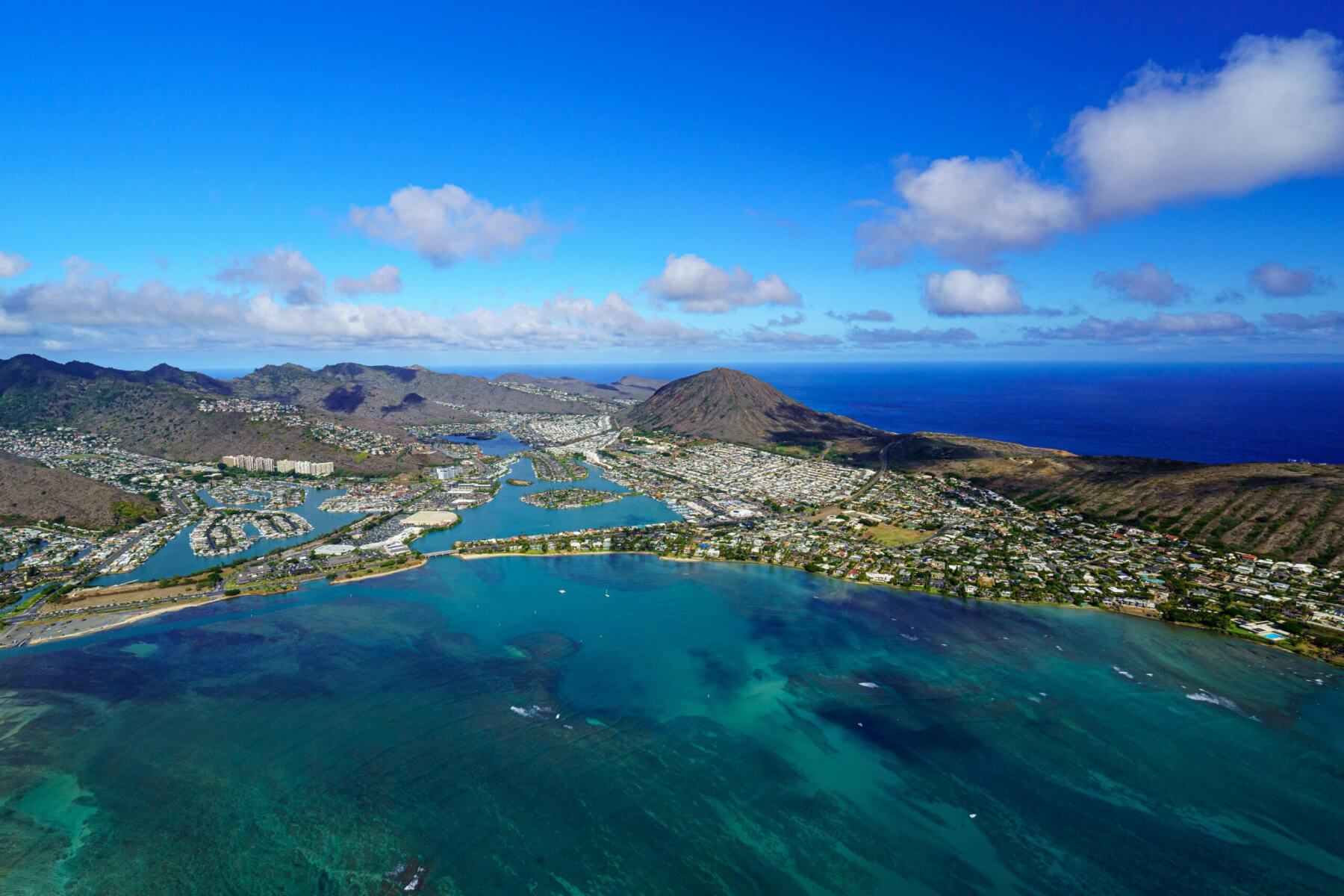
Aerial View of the the Island Coastline with Buildings and Mountains, Hawaii, USA. Photo: Cyrill pexels.com