

Through most of the last year I have suffered with global osteo-arthritis so this column has not been high on my list of priorities!
However over the last couple of weeks two special events in our neighbourhood have lit a spark which has led me back to my computer keyboard to share some thoughts.
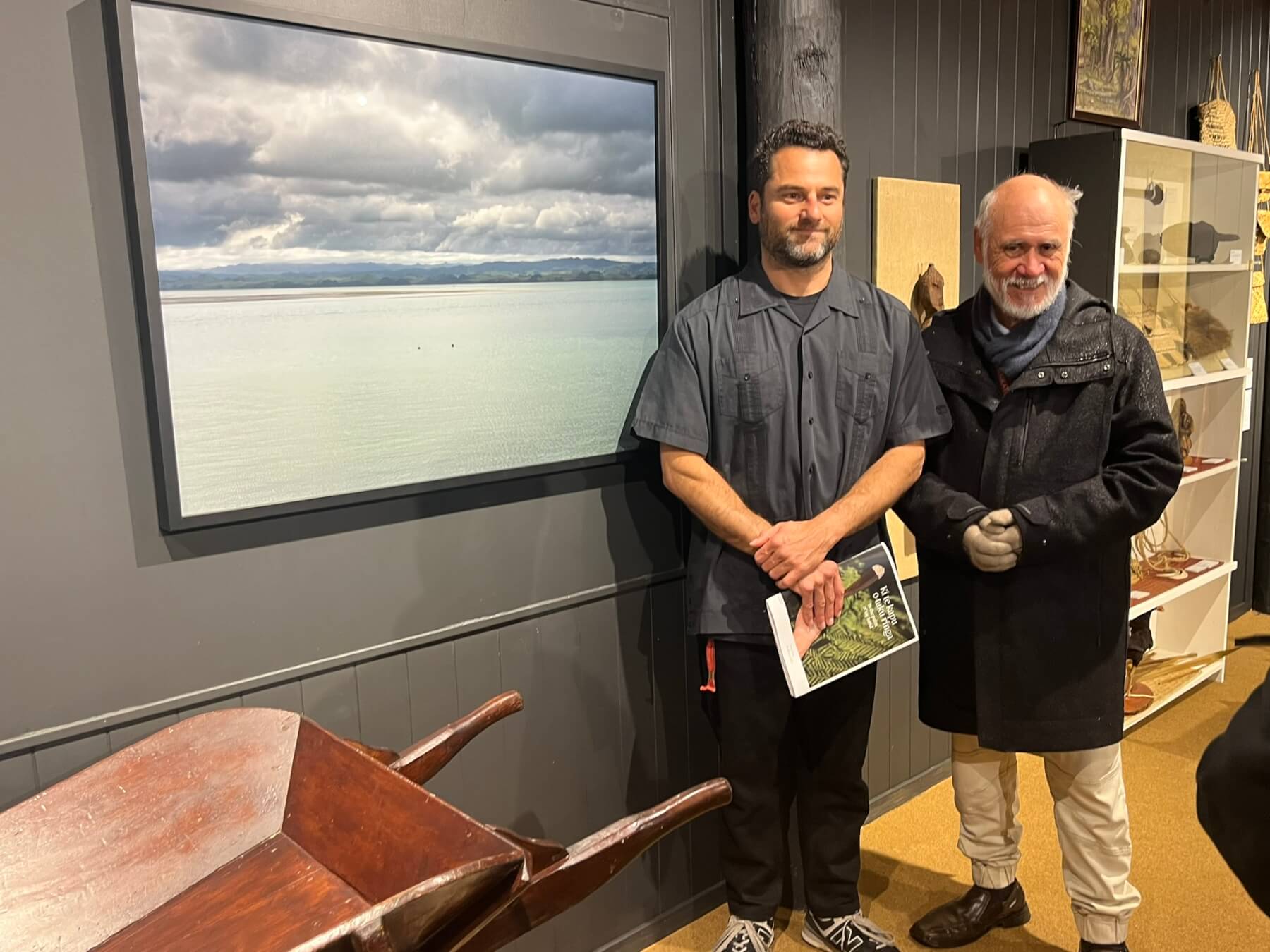
Professor Tom Roa and Dr Rodrigo Hill from Waikato university have launched a new photo exhibition and book at Ōtorohanga museum.
Two weeks ago my colleague Dr Rodrigo Hill and I opened a photographic exhibition at the Ōtorohanga Museum launching with it a book, both titled, ‘Ki te kapu o taku ringa – In the palm of my hand’
We have spent the last two years exploring the notion of an indigenous Māori lens, and what that might be in juxtaposition with a non-indigenous, other-than-Māori lens.
In the Western world ethic, all rights to a photograph reside with the photographer. It is very important that their Intellectual Property is to be respected and all rights to that IP upheld.
The Māori philosophy of acknowledging and according a principled respect to the ‘mana’ of the subject (or should that be object?) of the photograph is not a high priority.
Our project asserted that a photograph of moment in the Māori world should recognise the ‘mana’ of its subjects thru ‘wānanga’ with the ‘mana whenua’ the people of the land, the landscape, the flora, the fauna, whose narratives shared through those ‘wānanga’ (which Linda Tuhiwai Smith describes as ‘thought spaces’) accord a principled respect of the subjects of the photograph.
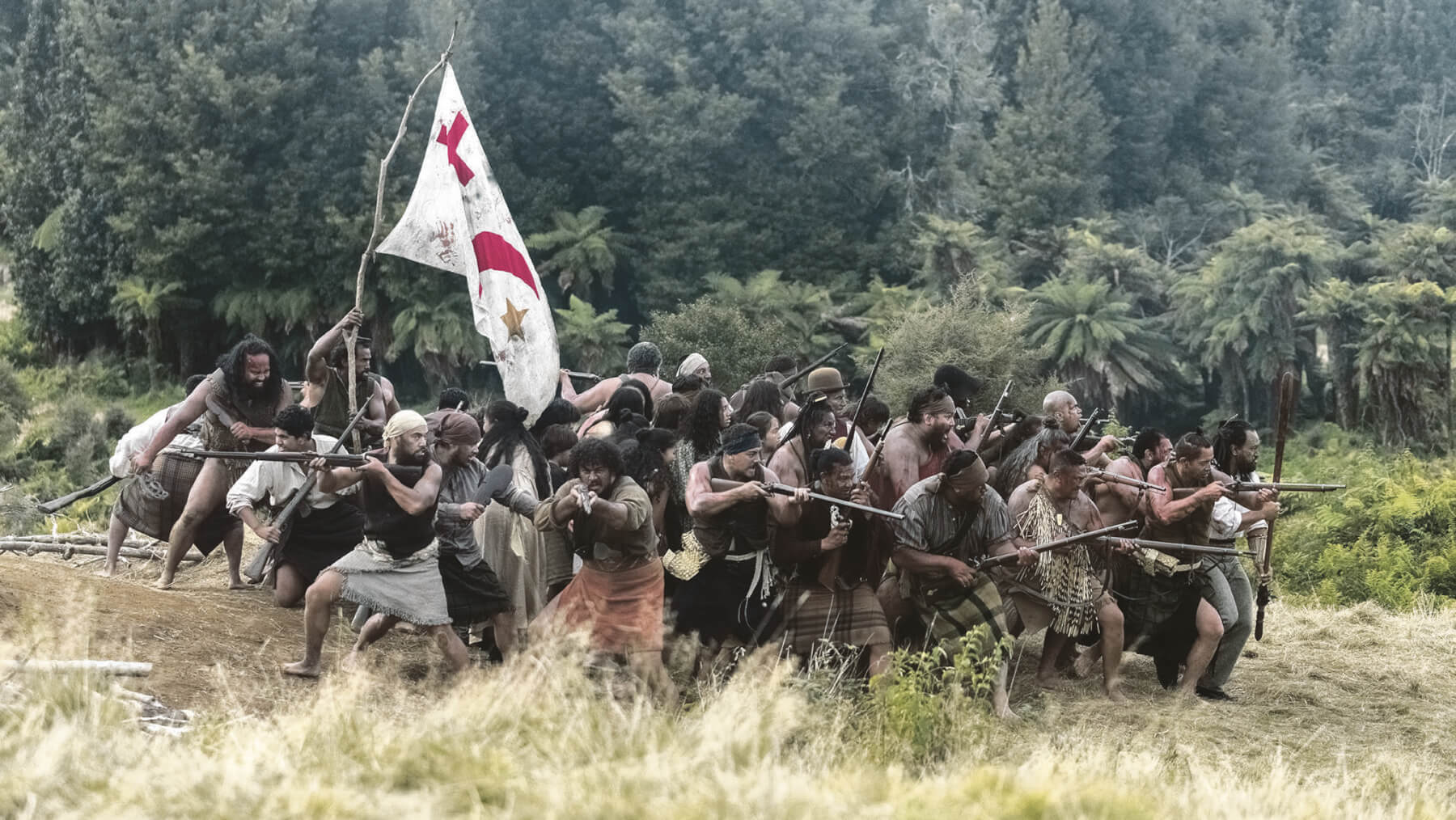
Ka Whawhai Tonu made cinema history by depicting O-Rākau through a Māori lens.
The Regent Theatre in the centre of Te Awamutu is showing a movie whose narrative is arguably at the centre of our district’s history. The heroism in Manga’s (Rewi Maniapoto’s) reported assertion at Ōrākau, ‘Ka whawhai tonu au ki a koe , ake, ake, ake!’ resounds locally, nationally, internationally. Three hundred Māori, men, women, and children, at that time essentially still a stone-age culture, protecting their lands, lives, and livelihoods, held at bay for three days 1500 soldiers of the most powerful army in the world with the most modern arsenal of weapons of that time.
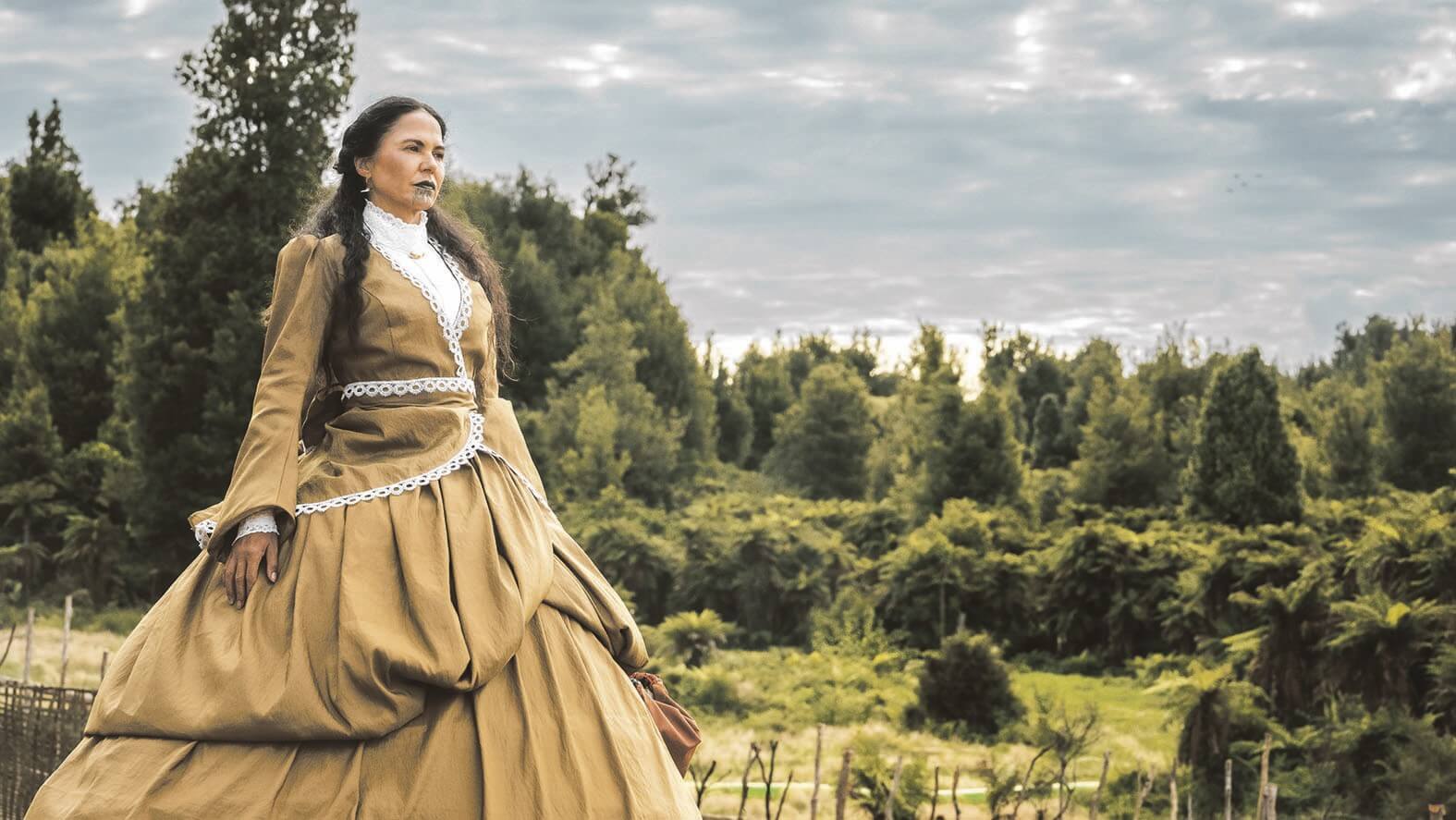
Miriama Smith in the role of Hine-i-Tūrama.
The production team spent weeks in pre-production preparation holding wānanga with the descendants of those who fought in the battle. During the filming groups of descendants were again involved in front of as well as behind the camera. Post-production the launch of the movies premiere in Hamilton and subsequent showings in Te Awamutu attracted full houses.
Māori in those audiences remarked, often too loudly, ‘Look there’s So-and-So!’ In doing so asserting their relationship to the movie and its subject(s), acknowledging their (collective) mana.
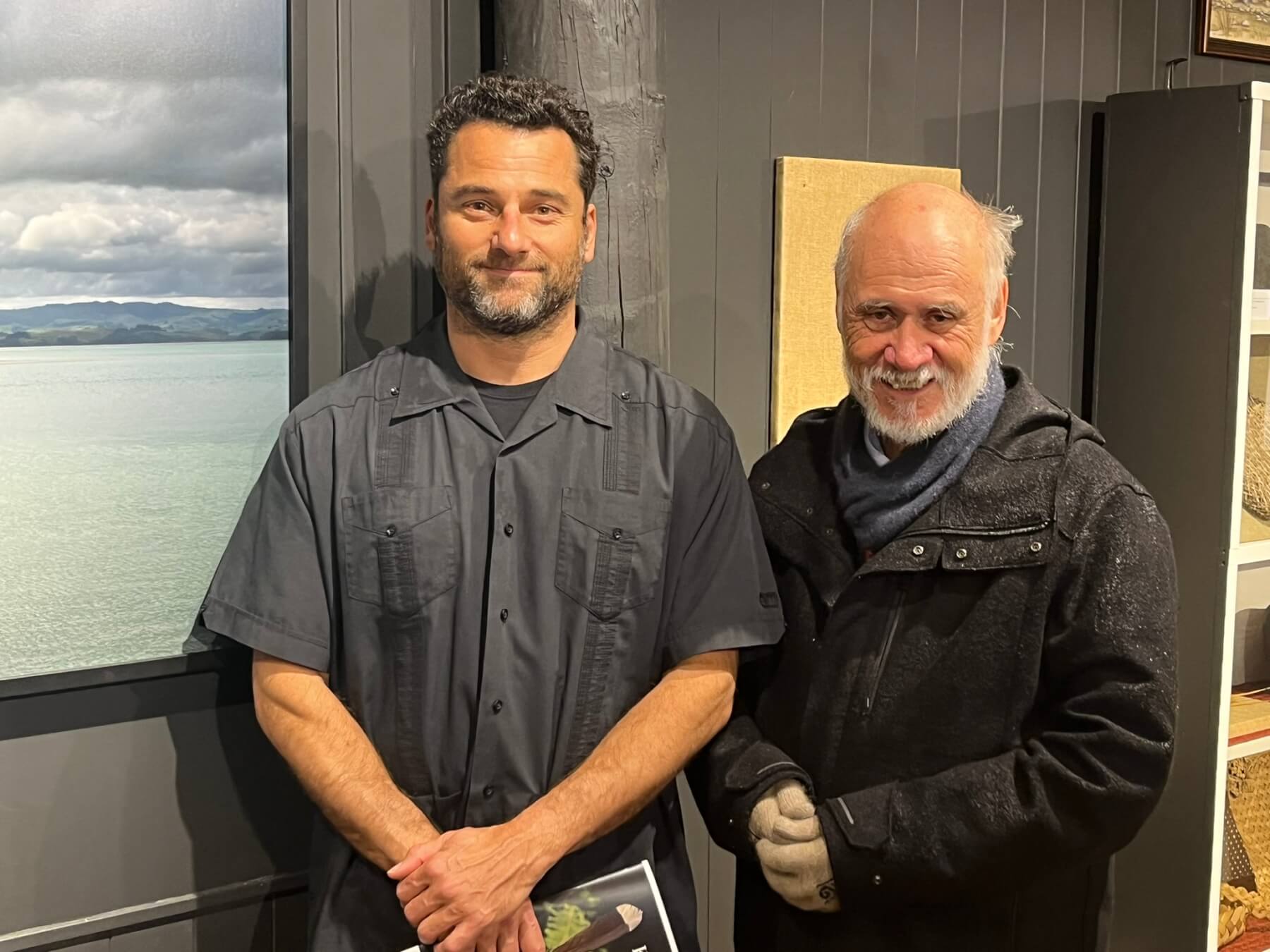
Professor Tom Roa and Dr Rodrigo Hill from Waikato university have launched a new photo exhibition and book at Ōtorohanga museum